






Starting your fitness journey does not always require a gym membership or expensive equipment. In fact, some of the most effective workouts can be done right at home, making it easier for beginners to develop consistency, confidence, and long term commitment to a healthier lifestyle. With the rise of home fitness routines, people are discovering how accessible and enjoyable exercise can be when it fits naturally into their day. This guide on the top 10 beginner friendly workouts at home is designed to help you understand what works best for your body, how to build foundational strength, and how to stay motivated as you progress. Whether you are looking to lose weight, improve flexibility, or simply stay active, these workouts offer a balanced approach that supports your overall fitness goals.
Understanding Why Home Workouts Work So Well
Working out at home eliminates many common barriers such as travel time, gym intimidation, or unpredictable schedules. Beginners often find it easier to stick to a routine when they can exercise in a comfortable space where they feel safe and free from comparison. Home workouts also encourage creativity since you learn to use your bodyweight efficiently and adapt movements to your fitness level. The key is to choose exercises that build a strong foundation without overwhelming your body. The following beginner friendly workouts will help you improve stamina, flexibility, strength, and coordination with simple movements that require little to no equipment.
1. Walking or Marching in Place
One of the simplest ways to start moving is by walking or marching in place. It elevates your heart rate without putting too much pressure on your joints, making it ideal for beginners. You can gradually increase intensity by lifting your knees higher or swinging your arms more vigorously. This low impact movement is also a great warm up before transitioning into other exercises.
2. Bodyweight Squats
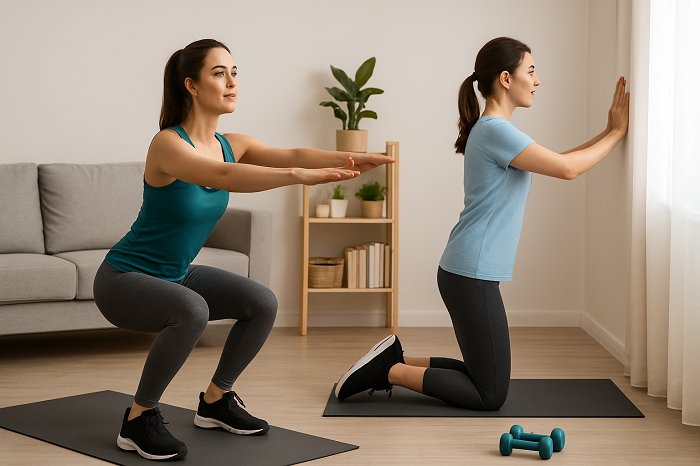
Bodyweight squats help strengthen your legs, glutes, and core, which are essential muscle groups for everyday movement. Beginners can start with shallow squats to focus on form and stability. Over time, you can challenge yourself by lowering deeper or increasing the number of repetitions. Squats are powerful for building functional strength that improves balance and posture.
3. Static Lunges
Lunges are excellent for targeting the lower body while improving coordination and stability. Beginners can start with stationary lunges to avoid loss of balance that can happen with walking lunges. This exercise trains each leg individually, helping correct muscle imbalances and increasing overall lower body strength.
4. Wall Push Ups
Traditional push ups can feel intimidating for many beginners, but wall push ups provide a more accessible introduction to upper body training. Performing push ups against the wall reduces the load on your arms and shoulders while still strengthening the chest and triceps. As you become stronger, you can transition to incline push ups on a chair or countertop.
5. Glute Bridges
Glute bridges are one of the best beginner friendly exercises for activating the glutes and improving hip mobility. This movement supports your lower back and enhances posture by strengthening the muscles that often weaken from long hours of sitting. Glute bridges also engage the core, making them a great addition to any home workout routine.
6. Seated Leg Raises
For beginners with limited mobility or those who prefer a gentler start, seated leg raises are very effective. This exercise strengthens the hip flexors, thighs, and lower abdominal muscles while allowing you to maintain stability in a seated position. It is ideal for improving leg strength without strain.
7. Standing Side Leg Lifts
Standing side leg lifts improve balance and build strength in the hips and outer thighs. This movement is helpful for beginners who want to enhance stability and coordination while gradually strengthening the supporting muscles of the lower body. It also improves joint mobility and supports better walking posture.
8. Modified Planks
Planking is one of the best core strengthening exercises, but beginners may find full planks too challenging at first. Modified planks performed on the knees reduce the intensity while still activating the abdominal muscles, lower back, and glutes. This exercise builds core stability that benefits every other workout on your list.
9. Arm Circles
Arm circles are a gentle yet effective way to warm up and strengthen the shoulders, arms, and upper back. For beginners, this movement increases blood flow, loosens tight muscles, and prepares the body for more challenging upper body exercises. You can increase duration as your endurance improves.
10. Stretch and Cool Down Routine
A workout is incomplete without a proper cool down. Simple stretches help lower your heart rate, relax the muscles, and prevent stiffness. Stretching also supports long term flexibility and reduces the risk of injury. Beginners should take a few minutes after each session to gently stretch the major muscle groups with slow, controlled movements.
Bringing It All Together
The beauty of these workouts is their simplicity and adaptability. You can combine them into a beginner friendly routine lasting 15 to 25 minutes, or perform them individually on busy days. As your strength and endurance increase, you can extend your workout duration or gradually incorporate more advanced variations. Consistency is the key to progress, so focus on building a routine that fits naturally into your lifestyle. If you want to explore related fitness strategies, consider learning more about building strength without equipment or improving daily healthy habits to complement your workouts.
Conclusion
Starting your fitness journey at home is one of the most empowering decisions you can make. The top 10 beginner friendly workouts listed here provide a solid foundation that helps you build strength, confidence, and lasting motivation. With no equipment required and no barriers to entry, these exercises make fitness accessible for everyone. Whether your goal is weight loss, increased energy, or overall wellness, consistency with these movements will help you move closer to a healthier and stronger version of yourself. Stay patient, listen to your body, and enjoy the process of becoming more active day by day.
Frequently Asked Questions
Q1. How many times a week should beginners work out at home?
Answer. Most beginners benefit from working out three to five times per week. This provides enough time for your body to adapt while allowing rest between workouts.
Q2. How long should a beginner home workout be?
Answer. A beginner friendly workout can last between 15 and 30 minutes, depending on your energy level and fitness goals. Consistency is more important than duration.
Q3. Do home workouts really help with weight loss?
Answer. Yes, home workouts can support weight loss when combined with a balanced diet and active lifestyle. The key is to stay consistent and gradually increase intensity.
Q4. Do I need equipment to start working out at home?
Answer. No equipment is needed for beginner home workouts. Bodyweight exercises are effective for improving strength, flexibility, and endurance.
Q5. How do I stay motivated to work out at home?
Answer. Setting small goals, following a routine, tracking your progress, and choosing workouts you enjoy can help you stay motivated long term.